
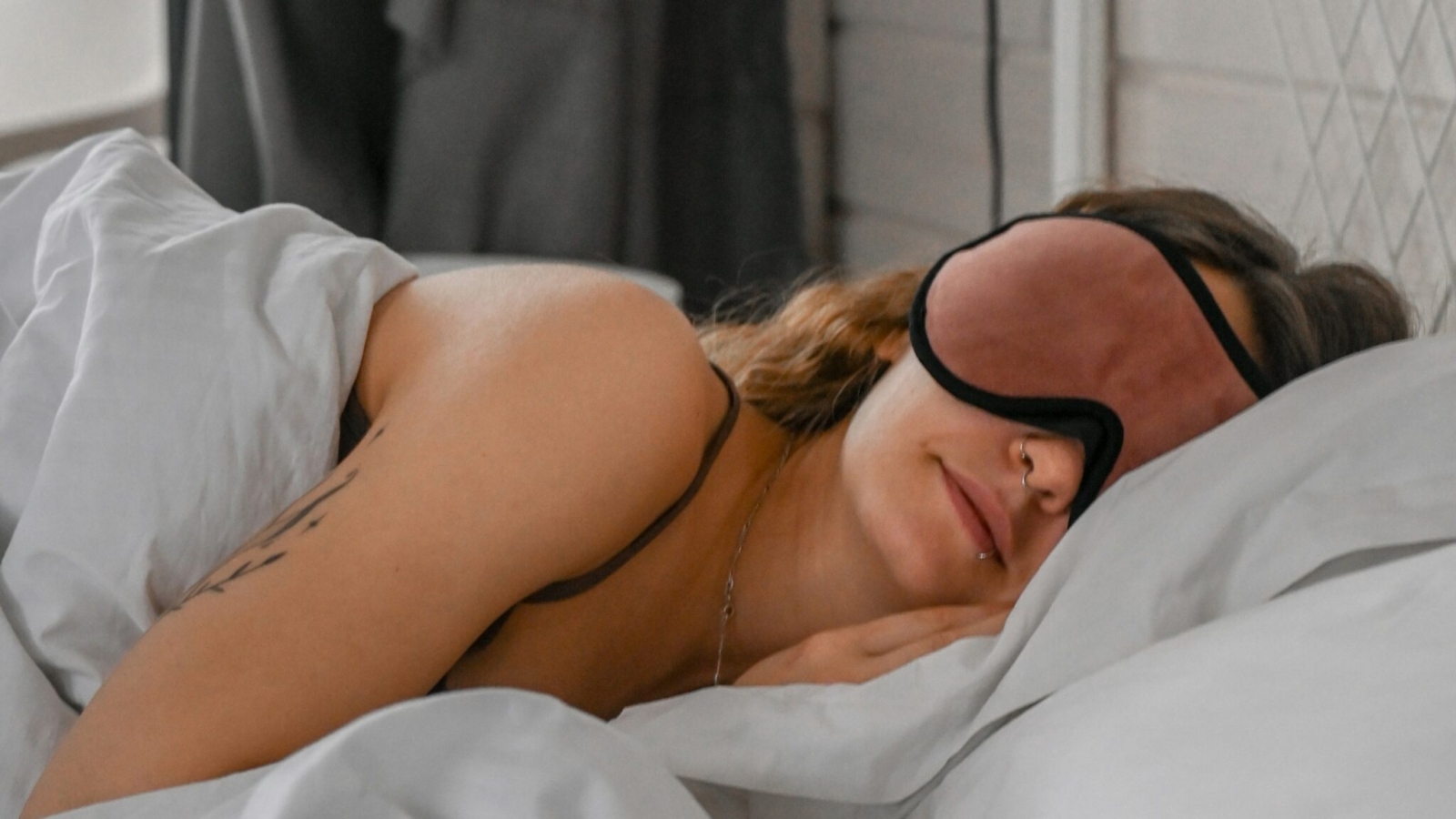
There are few things more crucial to your overall health than getting adequate sleep. It is the literal foundation of good health. But it’s so obvious and unsexy that many completely overlook it. Unless, well, they’re already suffering from insomnia.
But consider that even getting one fewer hour of sleep each night leads to…
- Eating 300 extra calories per day by default
- Profound insulin resistance even in young and healthy people who only suffer from short-term sleep deprivation
- Drops in endurance, VO2 max, and one-rep-max (as well as a 2.5x increased risk of injury)
- A higher risk of car accidents because the sleep-deprived brain has a similar reaction time to a drunken brain
- A stark increase in mortality rates, metabolic dysfunction, and chronic disease
Adequate sleep is THAT important. That’s why, when I stumbled upon an obscure strategy for improving sleep, which, despite the overwhelming proof it has, remains under the radar for most people (including healthcare professionals)… I got immediately certified in it!
This little-known strategy is called Cognitive Behavioral Therapy for Insomnia, or CBT-I for short.
Wait, does this mean it only helps folks with insomnia?
The short answer is no. But the longer answer is a bit trickier:
CBT-I is a specific strategy designed for insomnia (and since insomnia has a strict medical definition), unless you have a severe case of insomnia AND a co-morbidity like PTSD, anxiety, or depression, then you’ll have a hard time finding a CBT-I specialist who can help. It’s even harder to find one covered by insurance (if your insurance even covers it at all).
That’s another reason CBT-I is more esoteric than perhaps it ought to be. It’s also why I rushed to get my CBT-I certification: So I can help you if you just want a better relationship with sleep… where you can fall asleep in an instant, wake up feeling refreshed… and stave off the unshakable brain fog and cognitive decline that happens when you don’t get an adequate night’s sleep…
You DO NOT need to have insomnia to benefit from CBT-I or to join one of my CBT-I Cohorts. More on my cohorts later. For now, let’s dive into the overwhelming proof that CBT-I is the most proven and effective way to improve your sleep.
The Overwhelming Scientific (And Anecdotal) Proof Behind CBT-I
When I first stumbled upon CBT-I, I was floored by the overwhelming proof behind it. Particularly against sleeping medications. But it also showed promising results for other types of medications too.
Since it’s a strategy for better sleep, let’s first look at the studies which proved CBT-I to be more effective than sleep medication:
First, is a study Gregg D. Jacobs, Ph.D. and colleagues conducted at Harvard Medical School that compared CBT-I to the most widely prescribed sleeping pill, Ambien. The study found that CBT-I was more effective than Ambien for patients with insomnia in both the short-term (4 weeks), and more importantly, in the long-term (one year). This study also uncovered an inconvenient truth about Ambien: They found it’s only moderately effective when taken, but that all benefits disappear if you discontinue use. Compared to Ambien, 80% of patients fell asleep faster with CBT-I. However, what’s even more promising is that 50% of the CBT-I patients fell asleep as quickly as normal sleepers.
Second, Dr. Charles Morin of Laval University in Quebec, Canada conducted a different kind of study which looked at whether CBT-I was effective for long-time users of benzodiazepine sleep medications (or, “benzos”). He concluded that 85% of long-term users were able to completely eliminate sleep medication using CBT-I.
Now, here’s where things get even more interesting…
The third study shows that CBT-I is also effective against other “downstream” effects of insomnia. For example, CBT-I doubled the improvement rates of depression compared to antidepressant medication alone in depressed patients with insomnia. More: It was also found helpful against a variety of co-morbidities that insomniac patients also had including pain, fibromyalgia, depression, PTSD, and substance abuse.
A somewhat recent meta analysis where five studies met criteria for analysis included the following:
====
CBT-I is effective for treating insomnia when compared with medications, and its effects may be more durable than medications. Primary care providers should consider CBT-I as a first-line treatment option for insomnia.
=====
So, why then, has nobody really ever heard of CBT-I?
Well, to risk oversimplifying a complex issue, the general lack of awareness around this solution comes down to funding. Despite insomnia being the most prevalent sleep disorder, it receives the least amount of federal research funding of any sleep disorder. It receives far less funding than other sleep disorders like sleep apnea.
What does the anecdotal proof say?
There are countless anecdotal stories you can find online that back up the various scientific claims. But I’d rather share my own personal story – especially since I don’t have insomnia proper.
While I don’t have insomnia, I am a night owl. And I hate it! Being a night owl has really interfered with my life because my life doesn’t naturally align to my circadian rhythm.
As far as sleep is concerned, there are only two metrics that matter:
- Your circadian rhythm (which isn’t really a sleep issue)
- And your sleep drive, or how sleepy you feel
The magic behind CBT-I is that it restores sleepiness (it doesn’t reset circadian rhythm).
As a night owl, no matter how sleepy I feel during the day, I do NOT feel sleepy at all come bedtime. Perhaps you can relate.
Well, after just a few CBT-I sessions, my sleep identity — or my belief that I’m a night owl who doesn’t get sleepy at night — improved immediately. Instead of needing to “effort” myself to sleep (which isn’t ideal, you shouldn’t have to be “efforting” to sleep), CBT-I made me feel sleepy.
It completely opened my eyes to the effectiveness and usefulness of this strategy.
And, yes, I woke up feeling more refreshed than usual too.
So Who Is CBT-I For?
As I mentioned earlier, while CBT-I is the first line defense for insomnia, you don’t need to have insomnia to benefit from it.
If you simply want a better relationship with sleep…
Or you’re tired of tossing and turning for what feels like hours before finally drifting off…
Or if you’re on sleep medications and you desperately want to unshackle your reliance on them…
Or if you want to simply improve your sleep in a way that’s proven to be more effective in the short and long-term (as well as far safer as CBT-I has ZERO side effects), then CBT-I is for you.
But how do you find a CBT-I specialist?
I’m glad you asked. Since being certified in CBT-I, I’ve launched the Sleep Soundly System, a comprehensive package designed to help you experience deeper, more restorative rest. You can learn more about my Sleep Soundly System here.
But wait – there’s another way…
I have also been hosting CBT-I Cohorts, an easier way to use CBT-I to improve your sleep. I don’t have any dates currently planned for my next CBT-I Cohort (I’m currently leading a small group through it), but I’ll announce the next cohort to my email list.
Add a Comment